
 TR
 ES
 AR
 RU
 IT
 ZH
 FR
What is Bookmatch? Symmetrical Matching and Pattern Continuity
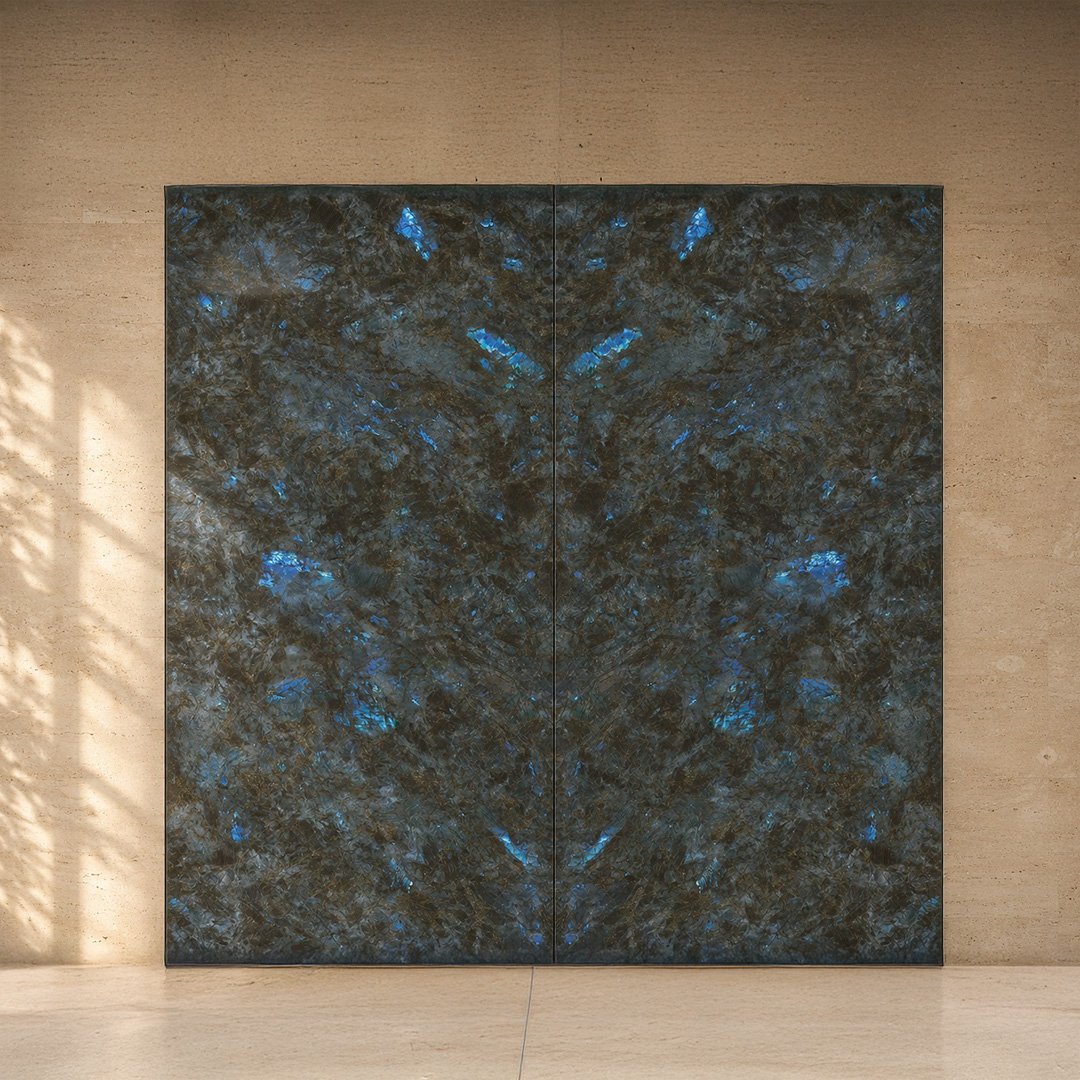
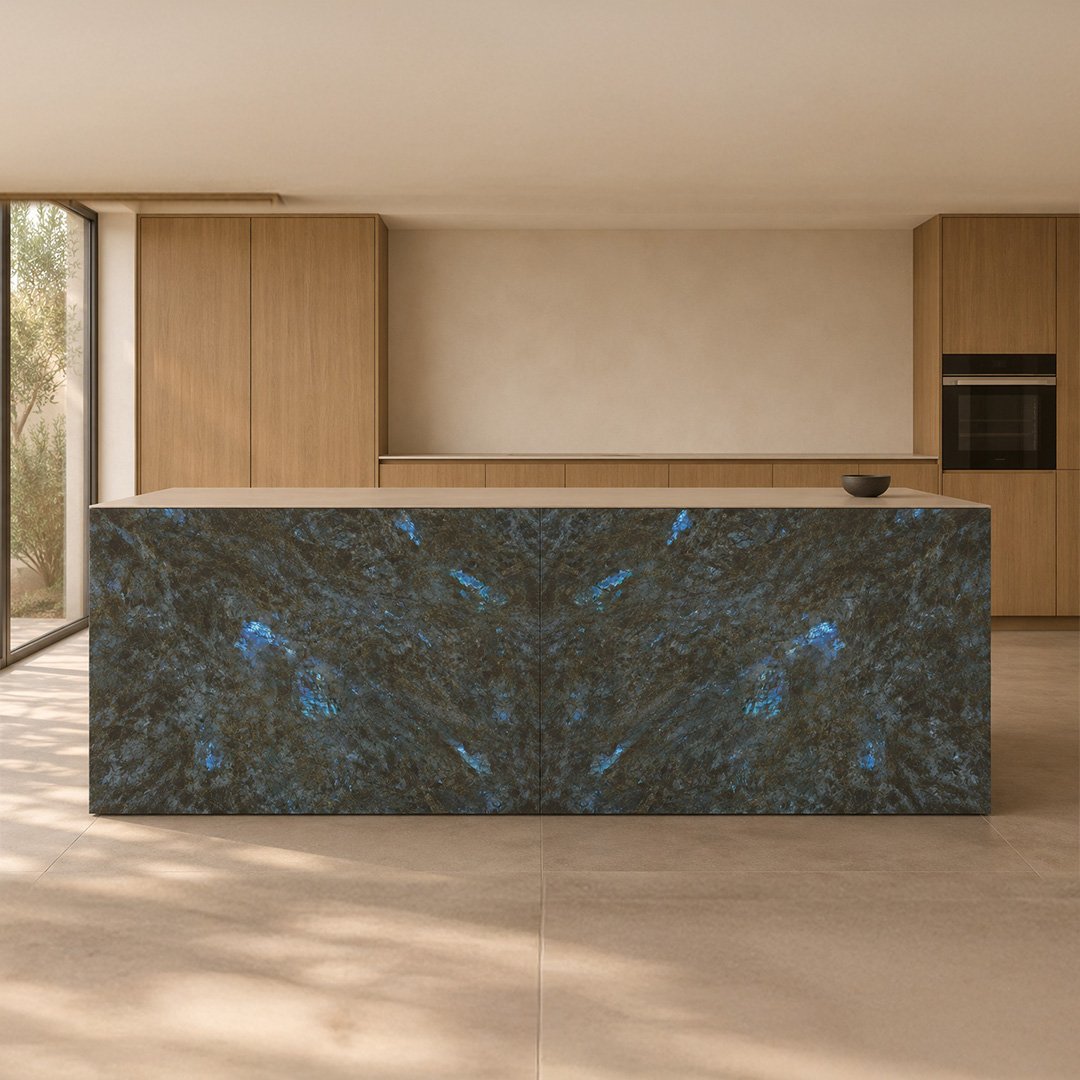
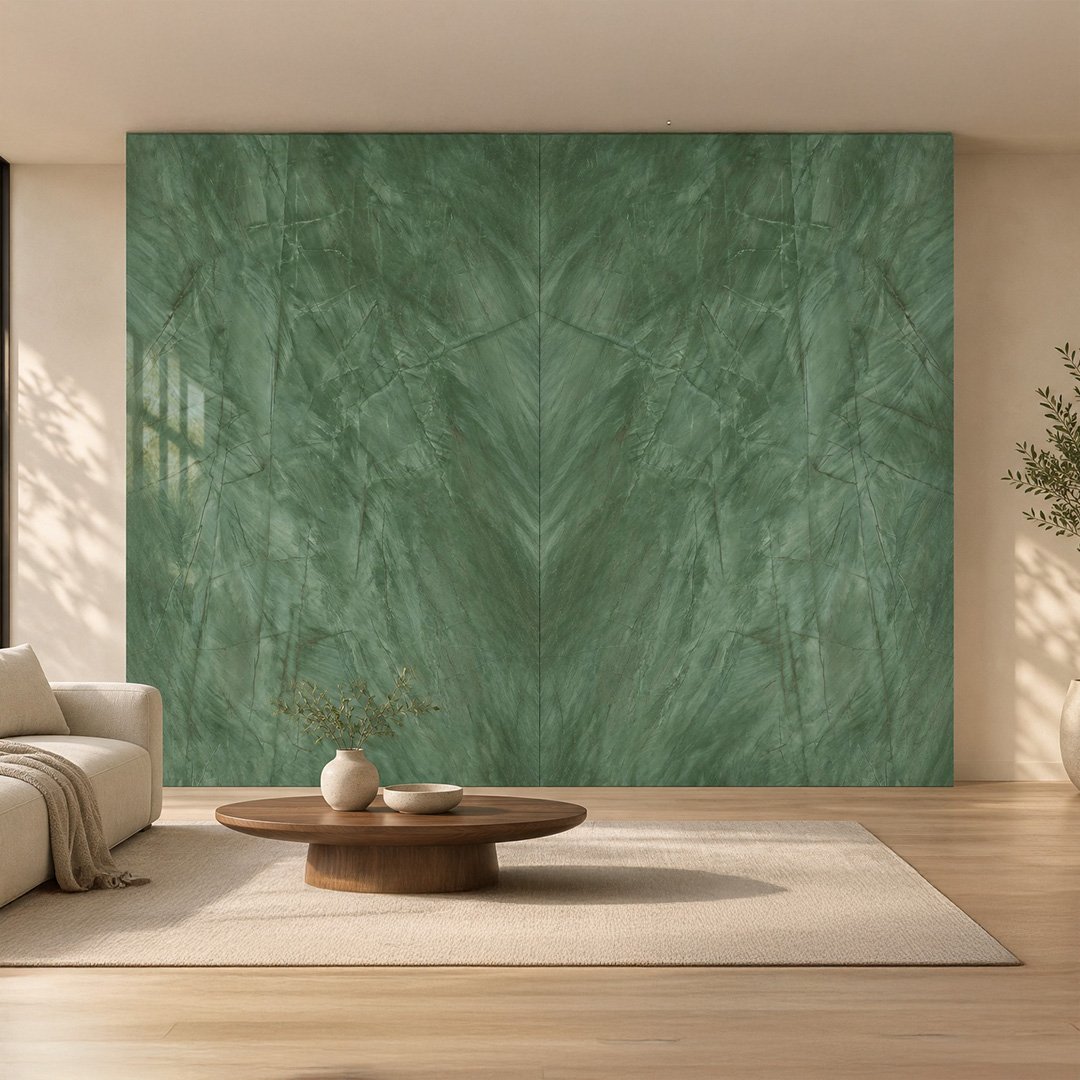
Bookmatch transforms the pattern of two matching slabs into a symmetrical composition on both sides of a joint line. Veins opening like wings on a large wall or colors gathering in the center on the front face of an island are the effects of this arrangement. A good result depends not only on choosing the same model but also on the correct pattern pair and how the pieces are positioned.
What does Bookmatch change on the surface?
In symmetrical matching, the eye reads the lines on both sides of the joint together. An axis is formed in the middle; veins can diverge from this axis, approach it, or form a more closed shape. Therefore, the joint ceases to be just the meeting point of two pieces and turns into the regulating line of the pattern.
The effect is particularly evident on a wide wall, an island front, or a large table. In models where veins are dominant, a single strong focus can be established. In patterns with finer veins, symmetry brings a calmer order to the surface. If a cabinet, niche, or sink gap covers a part of this composition, the symmetry shown by the whole slab may not be equally visible in practice.
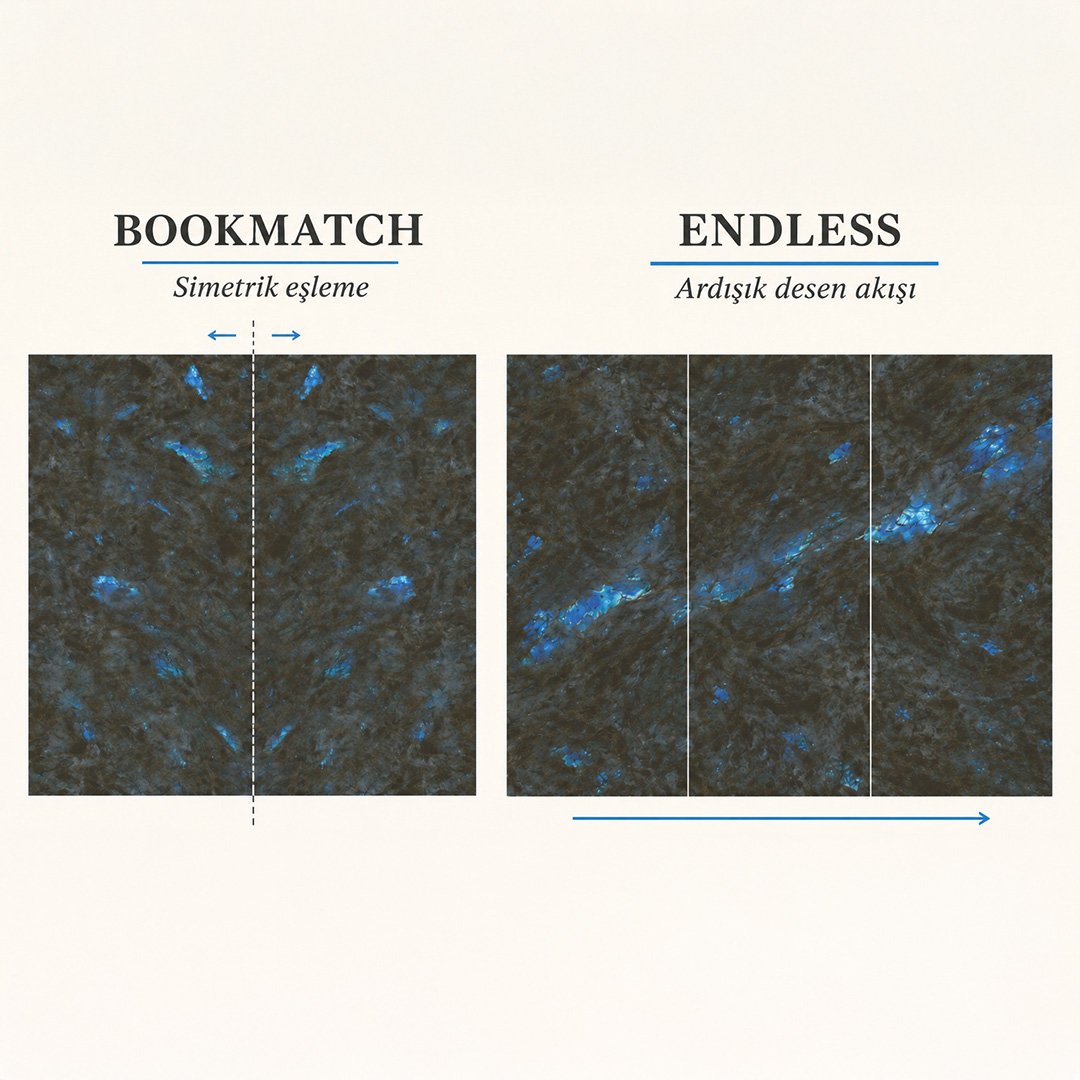
Difference between Bookmatch and Endless
While Bookmatch establishes a mirrored layout, Endless aims for the progression of the pattern between consecutive slabs. The former creates a central composition, the latter creates a continuous flow across the surface. The two terms can be seen together in the options of the same model; however, they do not mean the same thickness or the same pattern code.
The name Endless does not guarantee a flawless continuation on all four edges of the slab and after every cut. Which piece will come side by side in which order, the cutting locations, and the joining direction are important. A pattern turning from a horizontal countertop to the side of a vertical island is also considered separately. Matching that works on a flat surface does not occur spontaneously at the corner.
Baobab: bringing color areas together with symmetry
Atlas Plan Baobab combines brown-black accents on its beige and gray background with green and blue details. In this multi-colored graphic, the matching consists not only of fine vein lines; the approach of large color areas to each other also determines the composition. A small sample does not explain this entire distribution.
Baobab's 162 x 324 cm unrectified, 12 mm Polished option features the standard pattern and Bookmatch. The 160 x 320 cm rectified, 6 mm Polished option is defined as Endless. Therefore, the Bookmatch image seen for 12 mm cannot be used as the pattern layout for a 6 mm order. This distinction is as important in terms of quoting and slab registration as it is for the appearance.
Exotic Green: balance of light areas on dark green
Exotic Green animates its deep green background with light-toned transitions. In a Bookmatch layout, these light areas can form a distinct shape in the center or distribute the dark areas to both sides. Where the matching starts changes whether the surface is perceived as brighter or denser.
The documented Bookmatch option of the model is in 162 x 324 cm unrectified format, 12 mm Polished surface. Plain cabinets and walls can highlight this color composition. The presence of other strong patterns in the same area creates multiple focuses; the result is related to what is desired to be seen more in the space.
Joint line and cut placement
The line determining the center of symmetry does not have to be in the center of the space. For example, it can be positioned behind the seating group on a wall, and according to the visible main surface on the island front. A narrow strip left on the edge or a gap opened later can remove a part of the balanced-looking lines.
For this reason, full slab images and finished piece placement provide different information. When a slab pair is seen side by side, the whole pattern is understood; when the pieces are processed into the layout drawing, it reveals which part will actually remain. Visual matching does not eliminate the necessary joint gap or application details.
The viewing direction also changes the result. Wall cladding is mostly seen from the front; a table or countertop is approached from different angles. A symmetry that is very pronounced in a photograph can be perceived as more fragmented with the placement of furniture and objects on it. Therefore, instead of a composition showing only a blank surface, a layout view that includes furniture and usage elements provides more information. Determining the center of the pattern also involves considering from which angle that surface will be seen in daily life.
What information should be together in slab approval?
Along with the model, thickness, surface, pattern option, manufacturer product codes, and slab directions must be in the same record. The fact that the model name of two independent standard slabs is the same does not indicate that they are a Bookmatch pair. Setting aside matching slabs together and approving the placement before cutting establishes the connection between the visual decision and the material order.
The manufacturer catalog option does not show local stock quantity or delivery date. Actual slab photos, sample, and supply information are recorded exactly during the quotation stage. The general format and thickness relationship is explained in the porcelain slab size, thickness, and surface guide; the Bookmatch decision is a pattern placement decision tied to this technical identity.
Do two slabs of the same model create a Bookmatch?
The model name being the same is not enough. The matching pattern option, product codes, and slab directions must be determined together.
Are Bookmatch and Endless the same thing?
Bookmatch establishes a symmetrical composition, while Endless establishes a continuous pattern flow. Options can match with different thicknesses and formats in the same model.
Which option of Baobab is Bookmatch?
The Bookmatch option is the 162 × 324 cm unrectified, 12 mm Polished slab. The layout of the 6 mm Polished option is defined as Endless.
Does the pattern continue automatically at the corner?
No. Piece direction, cutting location, and corner detail are resolved separately; the matching on a flat surface does not automatically carry over to every edge.